


Custom home handover checklist for reporting defects and repairs
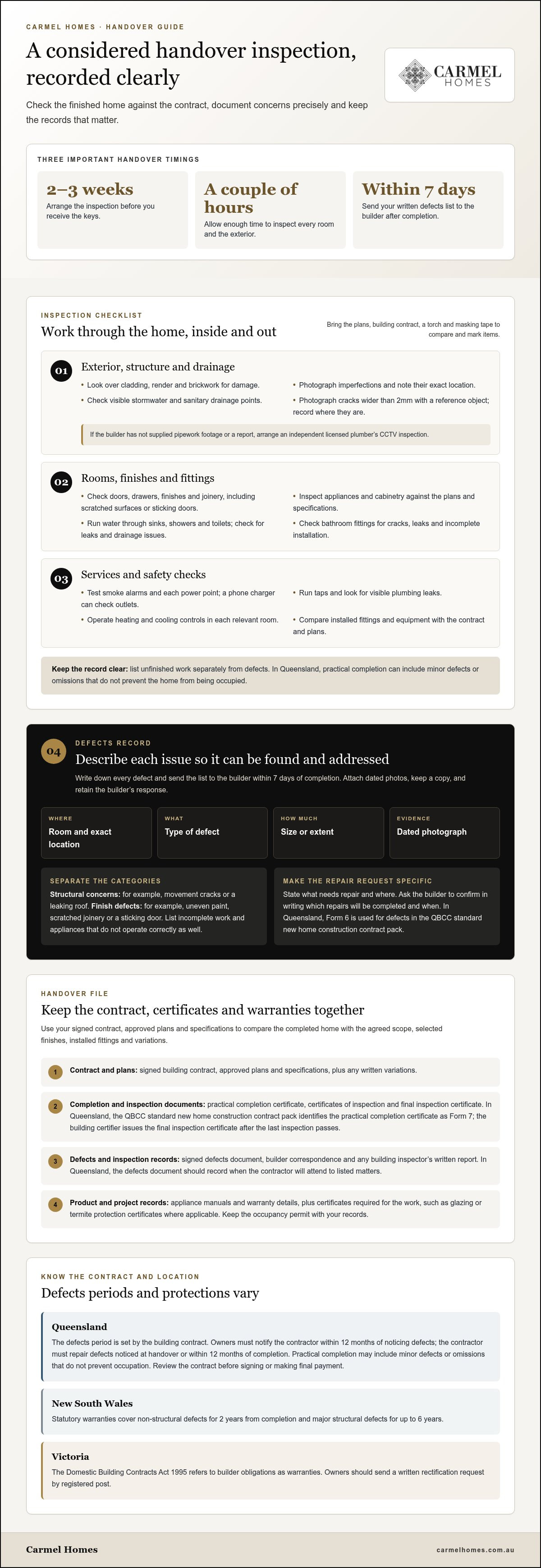
Arrange the handover inspection two to three weeks before you receive the keys, then record every defect in writing, including its location, type and size. A custom home handover checklist should also cover appliances, cabinetry and bathroom fittings, with the finished home checked against the contract plans and specifications.
A carefully finished interior deserves more than a quick glance. Doors, drawers, finishes and wet-area fittings are easier to assess before handover, when you can clearly record any concerns. A considered inspection helps you raise issues constructively while recognising the care invested in the home.
This guide explains what to inspect, how to document defects and discuss repairs with your builder, and which documents and warranties to collect. You’ll also find practical checks for appliances, cabinetry and bathroom fittings, so you can approach handover with a considered record of both the home’s craftsmanship and any items that need attention.
Table of Contents
When should the handover inspection take place?
Book the handover inspection two to three weeks before you receive the keys, allowing time to record unfinished work and defects. In Queensland, builders should advise clients two to three weeks before expected handover and give at least five business days’ notice before practical completion. The final inspection is typically booked and completed within seven days under the building contract process.
A thorough inspection of a family home can take a couple of hours, so allow enough time to check every room and the exterior carefully.
To inspect plumbing, electrical, heating and cooling systems, run the taps, look for visible leaks, test power points with a phone charger and operate each system’s controls. Compare the installed fittings and equipment with your plans and building contract.
Bring the plans, building contract, torch and masking tape. These help you compare the home with the agreed specifications and mark issues clearly.
Inspect exterior cladding, render and brickwork for damage. Photograph imperfections and note their exact location for your defects record.
Check visible stormwater and sanitary drainage points. If the builder hasn’t supplied pipework footage or a report, arrange an independent licensed plumber’s CCTV inspection.
Look for cracks wider than 2mm during the handover inspection. Photograph each crack with a reference object and record its position.
Test smoke alarms and each power point. A phone and charger provide a simple check that outlets work.
Run water through sinks, showers and toilets. Check for leaks, drainage issues and incomplete fittings in wet areas.
Operate heating and cooling controls in each relevant room. Note any system that won’t start or respond to its controls.
Some work may still be outstanding during the inspection, so list incomplete items separately from defects. In Queensland, practical completion means the home is finished under the contract, except for minor defects or omissions that do not prevent occupation.
How do I negotiate repairs or report defects to the builder?
Record every defect in writing and send the list to the builder within seven days of completion. Be precise: identify the room, location, type and size, and attach dated photographs. For example, note a chipped tile beside the ensuite shower rather than writing “bathroom needs attention”. Keep a copy of the list and the builder’s response.
Separate structural concerns, such as movement cracks or a leaking roof, from finish defects, such as uneven paint, scratched joinery or a sticking door. Include incomplete work and appliances that do not operate correctly. State what needs repair and where, rather than simply saying the finished home falls short of your expectations.
Ask the builder to confirm in writing which repairs will be completed and when. In Queensland, the QBCC standard new home construction contract pack uses Form 6 for defects, and the document should state when the contractor will attend to listed matters. Queensland’s defects period is set by the building contract; owners must notify the contractor within 12 months of noticing defects, and the contractor must repair defects noticed at handover or within 12 months of completion.
Other protections differ across Australia. In NSW, statutory warranties cover non-structural defects for two years from completion and major structural defects for up to six years. In Victoria, the Domestic Building Contracts Act 1995 refers to builder obligations as warranties; owners should send a written rectification request by registered post.
Can you refuse to sign or accept handover if defects remain? In Queensland, practical completion may include minor defects or omissions that do not prevent the home from being lived in, so their presence alone does not necessarily prevent handover. Record unresolved items in the defects document and review your building contract before signing or making final payment.
Keep relevant certificates and the occupancy permit with your contract, plans and defects records. A considered custom design and build approach also sets clear expectations for workmanship and completion from the outset.
What documents and warranties should I collect?
Keep the signed building contract, approved plans and specifications together as your handover record. Compare them with the completed home, including selected finishes, installed fittings and agreed variations. If a building inspector attends, keep their written report with your notes. Together, these records can clarify what remains incomplete.
Collect the practical completion certificate. In Queensland, the QBCC standard new home construction contract pack identifies this document as Form 7.
Obtain certificates of inspection and the final inspection certificate. In Queensland, the building certifier issues the final inspection certificate after the last inspection passes.
Request outstanding handover documents from the contractor. Queensland handover documentation includes the practical completion certificate for a new home and certificates of inspection.
Keep the signed defects document with your contract. In Queensland, it should record when the contractor will attend to listed matters.
Gather appliance manuals and warranty details. Match each document to the installed appliance or fitting, so owners can identify its terms and maintenance instructions.
Collect certificates required for your project. Examples include glazing or termite protection certificates, which may apply to the work completed.
In Queensland, practical completion means the home complies with the contract except for minor defects or omissions that do not prevent it from being lived in. Record outstanding items separately, including agreed repair timing, rather than relying on a verbal assurance. This gives you a clear record if a repair remains incomplete after handover.
On handover day, check that you have received all keys, remotes and access codes supplied for the home. Store these with the documents for installed appliances, heating and cooling equipment, and other specified fittings. Note which remote operates each garage door, for example, and keep the relevant instructions together.
File maintenance information for exterior elements, including gutters, alongside product warranties and certificates. An organised record helps you follow care instructions and find the right document when arranging routine maintenance or reporting a fault.
Checking appliances, cabinetry and bathroom fittings
Use the final walk-through to test each installed item, not just inspect its appearance. Keep a written record with your plans so you can match a fault to its room, fitting and agreed specification before final payment.
Switch on every appliance using its controls. Check the oven, cooktop, rangehood, dishwasher and any included laundry appliances, noting error messages, unusual sounds or functions that don’t respond.
Open and close every cabinet door and drawer. Check alignment, soft-close mechanisms, handles and internal shelves, then note any rubbing, loose hardware or damage to finished surfaces.
Run each tap and shower, then flush every toilet. Look beneath basins and sinks for leaks, confirm hot and cold controls work, and check that water drains without pooling.
Inspect shower screens, baths and tiled surfaces. Look for cracked grout, loose fittings, chipped tiles and gaps around sealant, because these can allow water into adjoining finishes.
Test bathroom exhaust fans and heated towel rails. Use their switches and controls, then record equipment that fails to operate or appears inconsistent with the plans.
Open and close windows beside wet areas. Check locks, handles and seals, and look for water marks or damage to the frame and surrounding render.
For each issue, note the room, exact location, visible symptom and whether the item operates. A photograph of a dripping mixer is more useful with a note identifying the ensuite basin. Keep appliance manuals and warranty information with your records, and request written confirmation of agreed repairs.
Separate cosmetic concerns, such as a scratched cabinet panel, from functional problems, such as a dishwasher that will not start. Record drainage concerns separately from tile or sealant defects, so each repair request identifies the symptom and its location.
During the final walk through, compare the installed finishes and fittings with your contract documents, then retain a copy of your written observations. If you’re planning a home shaped around considered detailing, discuss your custom home plans with the design team.
Carmel Homes: Custom Design and Build
Carmel Homes provides Custom Design and Build for homeowners seeking a residence shaped around their site, priorities and architectural character. If you are planning a new home, a Knockdown Rebuild, or a distinctive French Provincial or Modern Custom Home Design, this is a natural time to discuss how your vision can develop into a considered building plan.
A clear brief, carefully developed plans and agreed specifications set expectations for the building journey, including the standards you will refer to at handover. Carmel Homes’ bespoke design-and-build service helps shape those decisions around your aspirations rather than adapting them to a generic plan.
To discuss a home designed around your priorities, contact Carmel Homes or visit carmelhomes.com.au.
Carry your vision into the next chapter
Handover is a milestone, and the beginning of your home’s life with you. Careful decisions now can shape a residence that feels considered long after the final boxes are unpacked. Keep your custom home handover checklist as a practical record, and bring the same clarity to the choices that come before building begins.
For a future home, Carmel Homes offers Custom Design and Build, including Knockdown Rebuild and French Provincial Luxury Homes. These options suit homeowners who want a design shaped around their priorities rather than a standard plan. A considered conversation can help you explore how your site, preferred style and living requirements could come together in a home designed around you.
Contact Carmel Homes about your handover or a future custom home. Your next step can be measured, considered and entirely your own.
Frequently Asked Questions
When is the project complete?
Completion depends on the contract, the work required and the relevant state process. In Victoria, building work is complete when contracted work meets the agreed standard, major defects are rectified, and the building surveyor issues the applicable final inspection certificate or occupancy permit. Before treating the project as finished, compare delivered work with the contract and confirm required approvals have been issued.
What should be included in a custom home handover inspection checklist in Australia?
Check the contract scope, operation of installed equipment, visible finishes, drainage and handover paperwork. Tailor the checks to the design: inspect bespoke joinery against its drawings, for example, and operate its doors and drawers. Record each issue beside its room or location, then compare it with the relevant plan or specification. This makes the checklist a practical record, not just a list of rooms.
What defects should I check for during a new home handover inspection?
Look for incomplete or faulty work, including cracked finishes, leaking fittings, damaged exterior cladding, blocked gutters and power points that do not work. Check that doors, windows and cabinetry operate as intended. Photograph each concern in context and close-up, and distinguish visible damage from an item that fails when tested. This helps clarify whether the issue concerns appearance, function or both.
What documents, warranties and certificates should a builder provide at handover in Australia?
Collect the contract and variations, approved plans, practical completion documents, inspection certificates, appliance information and applicable warranty records. The documents required depend on the state and the work. In Victoria, for example, owners of a new home should obtain an Occupancy Permit, while a Certificate of Final Inspection applies to extensions and renovations. Include project-relevant certificates, such as glazing or termite protection, where applicable.
What is the practical completion inspection process under Australian building contracts?
The inspection lets owners assess the completed work against the contract before handover, while recording defects and omissions for resolution. In Queensland, the QBCC standard new home construction contract pack identifies Form 7 as the practical completion certificate and Form 6 as the defects document. Practical completion can include minor items that don’t prevent occupation; list these clearly and retain the completed documents with your contract.
Should I hire an independent building inspector or inspect the home myself?
You can inspect the home yourself or engage an independent building inspector or consultant to attend. A professional can provide a structured assessment, while your own walk-through helps identify practical concerns with fittings and finishes you will use every day. If you attend alone, bring the plans and contract, test systems methodically, take photographs and record each issue as you find it.


