


Questions to Ask a Custom Home Builder Before Signing a Contract
Updated: Oct 9
Contract language can be difficult to compare, particularly when allowances, variations and project timing affect how a build unfolds. Clarity before committing is not just about reading the documents closely. It is also about understanding how decisions will be made, recorded and reflected in the project documents as your home moves from concept to construction.
This checklist covers the documents and decisions that matter, from the agreed scope to how allowances, changes and timing are addressed. Carmel Homes brings more than 30 years of experience to bespoke design and build, guiding clients through a considered process in which expectations are clear and individual design intent is carried through with care.
Table of Contents
Why ask custom home builder contract questions before signing?
Questions about design, scope and inclusions in a custom home contract
Questions about price, allowances and variations before signing
Questions about timing, site responsibilities and project communication
How to review custom home builder contract questions and take the next step
Why ask custom home builder contract questions before signing?
Signing a building agreement is a significant personal and financial commitment. For a bespoke home, the contract should do more than state an overall price or describe a broad vision. It should translate your design intent into a documented scope, decisions and responsibilities, so you and your builder understand what is being delivered and how the project will proceed.
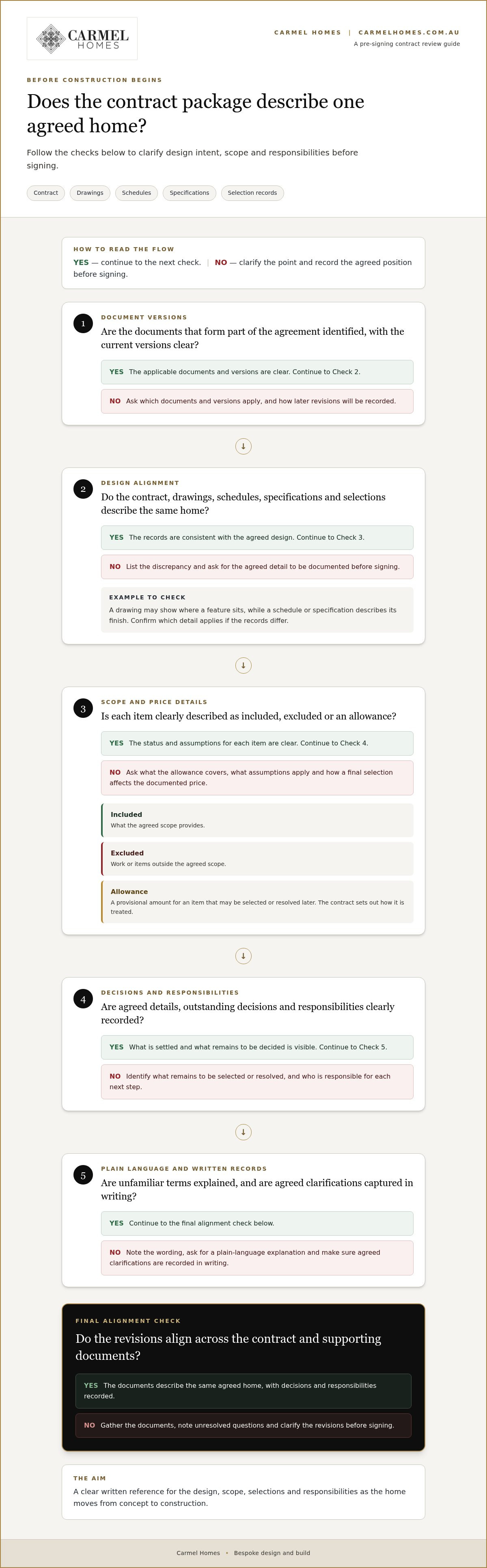
The questions to ask a custom home builder before signing a contract help test that shared understanding. Read the agreement alongside its supporting documents. Treat unclear wording and unrecorded assumptions as matters to resolve before signing, not details to interpret later. Start with questions such as:
Which documents form part of the agreement, and which version of each applies?
Do the drawings, specifications and selection records describe the same home?
Are responsibilities and outstanding decisions clearly recorded?
Can unfamiliar terms be explained in plain language?
A construction contract can take different forms and set out different obligations, so focus on how the particular agreement and its supporting documents apply to your project. Contract clarity depends on aligned drawings, specifications and written terms that describe the same home and the responsibilities involved in building it.
What should be clear before a custom home contract is signed?
Distinguish the signed contract from the documents that give it detail. These may include drawings, schedules, written specifications and selection records, each describing different aspects of the design, materials or decisions. Ask which versions are current and how later revisions will be recorded. If wording is unclear, note the passage and ask for a plain-language explanation during discussions. Make sure any agreed clarification is captured in writing.
For example, a drawing may show where a feature is located, while a schedule or specification describes its finish. If the documents differ, clarify which detail applies before treating the agreement as complete. The aim is not to settle every construction decision in advance. It is to identify what is agreed, what remains to be selected and who is responsible for each next step.
How does a bespoke build differ from a standardised home agreement?
A bespoke brief brings together choices shaped around your site, lifestyle and architectural preferences. Those decisions affect how the design is documented, which selections need to be recorded and how project information is coordinated. A repeatable plan may rely on established assumptions. A tailored home needs documents that express the particulars of your project rather than leave them implicit.
Consider a distinctive window arrangement or a carefully specified interior finish. The design intent should appear in the relevant drawing or written specification, with selections and responsibilities clear enough to guide the work. The more precisely the agreement reflects your brief, the clearer the path from concept to construction.
Questions about design, scope and inclusions in a custom home contract
A considered design should be reflected accurately in the documents that guide construction. Ask whether the contract package contains the latest agreed drawings, schedules and written specifications, and whether each document relates to the same version of your home. This matters if design discussions continued while the contract was being prepared, as an earlier plan or selection record may no longer reflect the agreed brief.
A feature is easier to assess when its specification and contractual status are documented. A description such as “stone benchtop” may leave important questions unanswered: which areas does it apply to, what finish has been selected, and is it included in the agreed scope? Clarifying these details helps preserve the design intent and makes the documents more useful as decisions move into construction.
Which drawings, specifications and selections form part of the agreement?
Review the plans, elevations, schedules and written specifications together. Check their dates, revision references and consistency with the contract. Plans may establish layout and dimensions, elevations show external appearance, and schedules and specifications record materials and finishes. Ask how approved selections are captured in the project documentation. A written record of choices, from cabinetry details to external finishes, helps carry the home’s intended character through construction.
Where a document refers to another drawing or schedule, make sure that reference is identifiable in the contract package. If two records appear to describe different details, list the discrepancy and ask for the agreed position to be documented before signing. This gives you and your builder a clearer reference as the design is translated into a coordinated build.
What is included, excluded or treated as an allowance?
Inclusions describe what the agreed scope provides. Exclusions identify work or items outside it, while an allowance is a provisional amount for an item that may be selected or resolved later. The contract determines how each is treated, so ask what an allowance covers and how a final selection affects the documented price. Make sure the wording explains the assumptions for each item rather than leaving its status open to interpretation.
Use a checklist to identify settled details and questions that remain:
Finishes: Are flooring, paint, tiles and benchtops specified or subject to selection?
Appliances and fixtures: Are the relevant types, locations and selections recorded?
Landscaping and external works: What is described in the scope, and what is excluded or provisional?
Record each unresolved item alongside its contract treatment, the decision required and any potential budget effect. For a bespoke design-and-build project, Carmel Homes’ custom design and build approach connects the design brief with construction, making precise documentation an important part of a shared understanding. The questions to ask a custom home builder before signing a contract help keep those details visible as you review the proposed scope.
Questions about price, allowances and variations before signing
Price clarity depends on understanding how each figure and qualification in the contract is treated. The contract price is the amount stated for the agreed scope, subject to the terms and assumptions in the documents. An allowance is a placeholder for an item or selection that remains to be resolved. A provisional amount may relate to work whose scope or cost is not yet fully established. An exclusion identifies an item or work outside the documented scope. Make sure the meaning and treatment of each term are clear in your agreement.
Ask which elements are included in the contract price, which remain provisional and which sit outside the scope. Selections, unresolved design details and site-related work can affect the cost of a bespoke project, so clarity about assumptions matters as much as the headline figure. The questions to ask a custom home builder before signing a contract should help you connect each uncertain item with a decision, responsibility and potential budget effect.
How should allowances and exclusions be made understandable?
For each allowance, ask what it covers, what assumptions apply and how the final selection will be assessed against it. Clarify whether the amount relates to a product, associated work or both, and how any difference will be documented. Exclusions should be identifiable in the signed document set, with wording that makes clear what falls outside the agreed scope rather than relying on an unstated assumption.
A simple comparison can reveal gaps without requiring you to estimate costs:
Item: Name the selection or work, such as a finish or external feature.
Contract treatment: Record whether it is included, an allowance, provisional or excluded.
Decision required: Note what needs to be selected, clarified or documented.
Possible budget effect: Record whether resolving it could change the agreed amount, and how that will be explained.
Apply the same check to finishes, fixtures, appliances, landscaping and external works where relevant. This makes it easier to compare the contract with your design priorities and identify decisions that remain open.
What is the written process for changes and variations?
Design choices may evolve, but each change should follow a clear written process. Ask who may request a variation, who will prepare its details and pricing, who can approve it, and how approval is recorded. Before authorising a change, understand its cost and any effect on the project programme. The process should make clear whether work can proceed before written approval rather than leaving that step to assumption.
For example, changing a specified finish may affect related drawings, schedules or work as well as the selection itself. Ask for the variation record to describe the change, identify its cost and timing implications, and refer to revised documentation where needed. Keep the approved record with the current contract documents so the agreed scope remains traceable as the project progresses.
Questions about timing, site responsibilities and project communication
A project programme is most useful when you understand the assumptions behind it, not just the dates it displays. Timing can depend on project conditions and decisions as the design moves towards construction. Before signing, discuss four areas: programme assumptions, available site information, decision responsibilities and how updates will be shared. Together, these checks clarify dependencies without implying a guaranteed completion date.
What should the contract say about timing and project dependencies?
Ask how the programme is described, which milestones it uses and what needs to happen before each stage can proceed. Clarify how approvals, client selections, site conditions and approved variations may affect the sequence. If an investigation or approval is relevant to your project, discuss where it fits in the programme and how its status will be recorded. The contract documents should explain project-specific assumptions rather than rely on a general estimate.
For example, a selection that informs a later design detail may need to be resolved before related work can be coordinated. Ask which decisions are needed from you, when they are expected and how changes to the sequence will be communicated. This gives you a practical view of your role in keeping decisions moving, without treating a date or duration as certain when project conditions have not been established.
Who manages decisions, updates and site-related responsibilities?
Establish who your main project contact will be, how information and decisions will be shared, and what update rhythm to expect. Clarify who coordinates the design, construction and client decisions, including how questions are directed and responses recorded. A defined communication method helps keep instructions, approvals and current project information together instead of dispersed across informal conversations.
Site information needs the same clarity. Ask what investigations, reports or other site details inform the project, who is responsible for supplying or coordinating them, and how relevant findings are reflected in the documentation. The discussion may cover access, existing structures or other site conditions, depending on the project. If an existing home or demolition is part of your plans, the guide to knockdown rebuilds provides context for that process.
Before signing, record the agreed communication arrangements, decision responsibilities and programme assumptions. These questions to ask a custom home builder before signing a contract help establish how the design-and-build partnership will work in practice, from early coordination through construction. Carmel Homes’ custom design and build service brings design and construction together under full-service project management.
How to review custom home builder contract questions and take the next step
A final review is most effective when it turns discussion into a clear written record. Gather the proposed contract and supporting documents, then work through the questions to ask a custom home builder before signing a contract against the current design and scope. Note each unresolved point, record the response and review any revised document before relying on it. This helps distinguish settled matters from assumptions that still need attention.
What should be resolved before signing the agreement?
Before signing, confirm that unanswered questions have written responses, agreed changes appear in the relevant documents, and the latest design is consistent across the contract, drawings and specifications. If a response leads to a revision, replace or clearly identify the superseded version so the document set is coherent. Once the agreement is signed, keep a dated copy with its supporting documents, including the final schedules and selection records.
Gather: Assemble the contract, current drawings, schedules, specifications and selection records.
List: Write down unclear terms, open decisions and any mismatch between documents.
Record: Keep written answers and agreed changes with the relevant project documents.
Review: Check revised versions and confirm they align before signing.
A contract is a substantial commitment, and its implications depend on its terms and the project circumstances. Consider seeking independent legal advice from a solicitor experienced in construction contracts to help interpret your obligations and the agreement’s wording. Building and consumer rules may differ between Australian states and territories, so seek legal guidance relevant to the jurisdiction where the project is located.
How can a design-and-build conversation make the next step clearer?
Once you have organised the key documents and questions, a design-and-build discussion can help bring your architectural vision and practical requirements into focus. Share the priorities behind your brief, the decisions already made and the points that remain open. This creates a useful foundation for discussing how design, construction and project coordination can connect throughout a bespoke build.
Carmel Homes’ custom design-and-build service guides clients from concept through construction and after-care, supported by full-service project management. The discussion can focus on how your individual brief is translated into a home, with practical questions considered alongside design intent.
If you’re ready to explore how your vision might take shape, you’re welcome to begin a conversation about a bespoke home.
Take the next step with confidence
A well-considered agreement creates a shared foundation for decisions as your home moves from an individual vision towards a place to live. The questions to ask a custom home builder before signing a contract can help you enter the process with greater clarity. The next step is a conversation grounded in your priorities, practical requirements and aspirations for the home.
As a family-owned Australian builder with more than 30 years of experience, Carmel Homes brings bespoke design and construction together through full-service project management, guiding clients from concept through construction and after-care. Each project begins with a distinct brief and benefits from a thoughtful discussion about how that vision can be realised.
When you’re ready to explore the possibilities, start a conversation with Carmel Homes about your custom home.
Frequently Asked Questions
Is it worth having a custom home building contract reviewed before signing?
Yes. A contract review can help you understand your obligations, exclusions, payment arrangements and the process for changes before you commit. Consider the questions to ask a custom home builder before signing a contract alongside the drawings, specifications and schedules, as these documents collectively describe the intended project. Requirements can differ between Australian states and territories, so seek jurisdiction-specific advice from an appropriately qualified professional.
What documents should I read with a custom home building contract?
Read the contract with the current plans, specifications, schedules, selection records and any other documents it incorporates. Check document titles, dates and revision identifiers against your design discussions. A simple document register can help you track the current version and confirm that referenced material has been supplied. If a document is missing or its role is unclear, note the issue and resolve it before signing rather than relying on an assumption.
Can I negotiate changes to a custom home building contract before signing?
Yes. You can discuss the proposed agreement before signing, and agreed changes should be captured in the contract documents or an appropriate written amendment. For instance, if a room layout or specified finish changes during discussions, check that the revised wording is consistent with the plans, specifications, price treatment and project responsibilities. Do not rely on an informal conversation to alter written terms. Review the final documents to confirm they reflect the agreed position.
What happens if I want to change the design after signing?
A design change may affect documentation, selections, cost or the project programme, depending on the agreement and stage of work. If you decide to alter a window arrangement, for example, the change may need to appear in the relevant plans and be recorded in writing. Follow the contract’s variation process and understand the documented implications before authorising work. Keep the approval and revised documents together so the current design remains clear.
Are custom home building contracts the same across Australia?
No. Contract requirements and relevant building rules can differ between Australian states and territories, and agreements may also reflect a project’s structure and scope. A form or explanation prepared for another jurisdiction may not suit your circumstances. Check which requirements apply where your home will be built, and seek qualified legal guidance if you need advice about your rights, obligations or particular contract wording.
Should the contract include every design selection before I sign?
Not necessarily, but the documents should explain which selections are settled and how outstanding choices will be handled. If a fixture is yet to be chosen, for example, look for clarity on whether it is treated as an allowance, when the decision is needed and how the final selection may affect the project. The aim is not to rush considered design choices. It is to make sure the agreement accounts for decisions still to come.


