


Hidden Costs When Building a New Home Australia: What They Cost
Hidden costs when building a new home in Australia can include landscaping, utility connections and finishes that aren’t covered by the base price. It’s understandable to focus on the quoted figure, but it may not reflect the full cost of a completed home.
A considered budget looks beyond the house itself. The block, its services, external works and level of finish all shape the completed project. This guide explains where extra costs can arise and how to review allowances and inclusions, so you can compare the full scope rather than a headline figure. Australian building-cost averages offer context, but they can’t predict the cost of a bespoke home. Each block and specification is different, so a useful comparison depends on what each allowance includes and what remains outside the contract. We’ll cover site conditions, landscaping, connections and fixtures, then put those averages in perspective.
Table of Contents
1. Are site costs included in a builder's quote?
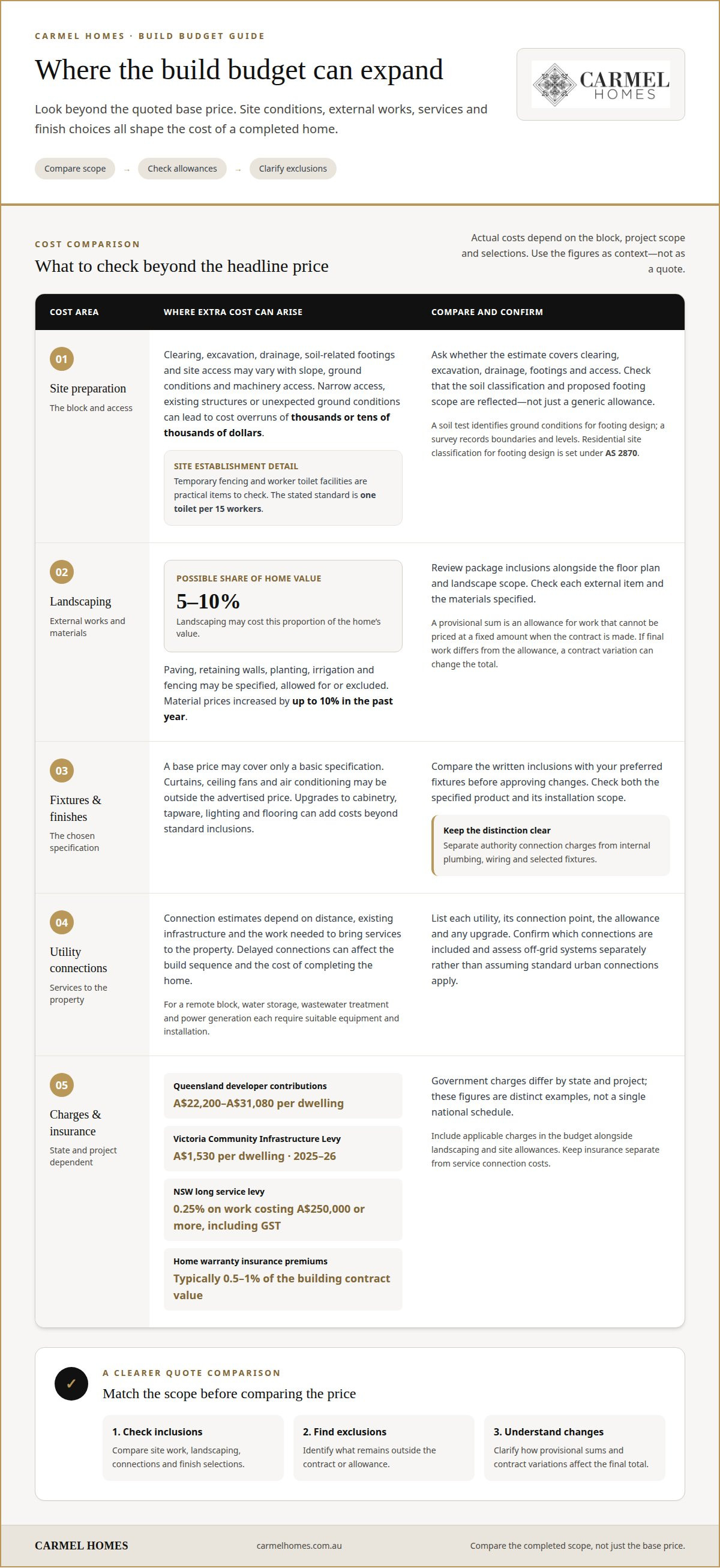
Site costs may be included in a building estimate, but the scope varies. Compare quotes for clearing, excavation, drainage, soil-related footings and site access. National estimates are only a starting point, since the block’s condition and slope determine the work required.
These figures help answer what site preparation, soil tests, excavation and drainage may cost together. The actual estimate depends on the work your block needs.
A soil test identifies ground conditions for footing design, while a survey records the block’s boundaries and levels. Australian residential site classification for footing design is set under AS 2870. Ask for the soil classification and proposed footing scope to be reflected in the estimate, rather than relying on a generic allowance.
Earthworks and drainage depend on levels, soil, water movement and how machinery reaches the building area. Narrow access, existing structures or unexpected ground conditions can require extra work and lead to cost overruns of thousands or tens of thousands of dollars. A survey, soil test and BAL assessment before budgeting can help identify site constraints early.
Temporary fencing and worker toilet facilities are practical items to consider when budgeting for a building site. Include these practical items when comparing what site establishment covers; the stated standard is one toilet per 15 workers. In New South Wales, a 0.25% long service levy applies to work costing A$250,000 or more, including GST, according to NSW Long Service Corporation.
Land purchase is separate from construction, so review the land contract and build estimate as distinct costs. Before signing, compare allowances and exclusions for preparation, access, earthworks, drainage and temporary facilities. This makes site-related hidden costs when building a new home in Australia easier to identify before construction begins.
2. Why Does Landscaping Cost So Much After the Build?
Landscaping is often treated as a finishing choice, yet it can shape the home’s usability and street presence. In Australia, landscaping may cost 5–10% of the home’s value.
Contract clarity matters before signing. A provisional sum is an allowance for work that can’t be priced at a fixed amount when the contract is made. If final landscaping needs differ from the allowance, the contract variation can change the total. Material prices increased by up to 10% in the past year, making timing and specified materials relevant to the estimate.
Review package inclusions alongside the floor plan and landscape scope. Check whether paving, retaining walls, planting, irrigation and fencing are specified, allowed for or excluded. A cost calculator can help organise an early estimate, but it can’t replace a quote based on the actual design, site access and material selections. Compare quotes using the same scope, and understand how changes are priced before signing.
Government charges also differ by state and project. In Queensland, developer contributions are reported at A$22,200–A$31,080 per dwelling. Victoria’s Community Infrastructure Levy is A$1,530 per dwelling for 2025–26. New South Wales applies a 0.25% long service levy to work costing A$250,000 or more, including GST, according to NSW Long Service Corporation. Home warranty insurance premiums typically cost 0.5–1% of the building contract value.
To answer what insurance, warranties, taxes and government charges apply across Australia: requirements and charges vary between states, and the figures above illustrate several distinct costs rather than a single national schedule. Include applicable charges alongside landscaping allowances, then clarify how variations and provisional sums affect the final contract. A carefully scoped Custom Design and Build can bring the home, site works and external design into a coordinated plan.
3. Fixtures, finishes and utility connections
A base building price may cover only a home’s basic specification, not every finish you imagine in the completed home. Curtains, ceiling fans and air conditioning may be outside the advertised price. Upgrades to cabinetry, tapware, lighting and flooring can add costs when you select options beyond the standard inclusions. Compare the written inclusions with your preferred fixtures before approving changes.
Connections are another distinct part of the budget. The estimate depends on distance, existing infrastructure and the work required to bring services to the property.
For a remote block, consider how off-grid systems would affect the design and services plan. Water storage, wastewater treatment and power generation each require suitable equipment and installation. Requirements depend on the site and household use, so assess them separately rather than assuming standard urban connections will apply. Delayed connections can also affect the build sequence and costs involved in completing the home.
Use a clear breakdown to distinguish authority connection charges from internal plumbing, wiring and chosen fixtures. Confirm which connections are allowed for, which upgrades are optional and how changes are recorded in the contract. The difference can involve more than the fitting itself, so compare both the specified product and installation scope.
Keep insurance separate from service connection costs in your overall budget. A practical schedule should name each utility, its connection point, the allowance and any upgrade. This makes it easier to see what you’re paying for, identify omissions and manage decisions before they affect construction. Review external connections and internal fixtures together, even when they are arranged separately.
4. Average house-building costs in Australia
No single average describes every Australian build. These measures provide context, but neither is a ready-made estimate for a particular design, block or specification.
State figures show why location matters. Differences in design, materials and project requirements mean you should compare quotes with matching inclusions, not treat state averages as fixed prices.
Construction costs have risen by A$100,000 over the past four years, and land can represent up to 50% of a new home’s total cost. Keep the land purchase separate from the construction estimate, then account for site work, landscaping, finishes and connections. This breakdown makes it clearer whether a figure covers the complete project or only the house.
Unexpected expenses can also arise if construction takes longer. A 20% contingency is recommended for a home-building budget, helping provide room for costs beyond the planned scope.
Use averages as a comparison point, not a substitute for a detailed, project-specific estimate. Review each quote against the same floor plan, specifications and inclusions, then separate fixed costs from allowances and potential changes. This makes the cost of building easier to assess across different designs and locations. To shape a more considered budget around your design priorities, discuss your custom home plans.
Carmel Homes: Custom Design and Build
Carmel Homes offers Custom Design and Build for homeowners who want their home’s design, finishes and site requirements considered as one connected vision. This is a natural next step when you’re weighing average construction figures against a distinctive brief, or when a standard plan doesn’t reflect how you want to live. With design and build brought together, your priorities can guide decisions from the initial concept through construction.
Whether you’re planning a new residence or considering a Knockdown Rebuild, start with your block, preferred architectural character and the inclusions that matter most. Carmel Homes also creates French Provincial Luxury Homes and Modern Custom Home Designs, with considered options for shaping a home around your aspirations. Contact Carmel Homes to discuss your plans.
Shape a budget around the home you want to create
Planning for hidden costs when building a new home in Australia supports confident design decisions; it needn’t mean compromising on the home you envision. Before moving ahead, clarify your priorities: which architectural details are essential, where you’re flexible, and how the site may influence the design. A considered brief gives each decision a purpose and helps align the home, its setting and the overall investment.
Rather than treating the budget as a single headline figure, use it as a framework for thoughtful choices throughout the process. Carmel Homes can help you explore how your aspirations translate into a custom home plan, with each element considered as part of the broader vision. When you’re ready to discuss your project, contact Carmel Homes about your build. A clear first conversation can set a considered direction for the home you’re ready to make your own.
Frequently Asked Questions
What Are the Hidden Costs of Building a New Home in Australia?
Hidden costs when building a new home in Australia can include expenses beyond the house contract, such as land preparation, service connections, landscaping, permit charges and selected finishes. Their impact depends on the block, design choices and written scope. Separate known selections from provisional allowances, then compare contracts against the same completed-home scope.
Why Does Landscaping Cost So Much After the Build?
Landscaping can add costs after handover because a finished home doesn’t automatically include a completed outdoor setting. Ground levels, retaining, paving, driveways, planting, fencing and irrigation each involve materials and labour. Compare practical access and drainage needs with optional garden detailing, then clarify which elements are included in the landscape scope before choosing finishes.
Are site costs included in a builder's quote?
Site costs may be included, partly allowed for or excluded. The quote’s scope determines what applies. Check the contract and schedules for site establishment, excavation, drainage, access, spoil removal and provisional allowances. A house plan may show the residence without detailing the work needed around it. Compare itemised inclusions and exclusions before judging the total or signing.
How Do Construction Delays Cost You Money?
The impact can extend beyond temporary accommodation: loan interest may continue, while changes to subcontractor schedules can affect the build. Map rent or existing-home costs against the construction timeline to understand your exposure, and consider how a delay could affect those commitments.
How Much Are Council and Permit Fees?
Building permit fees in Australia range from A$1,500 to A$15,000, depending on council and property value, based on 2025 figures. Separate permit charges from other project levies, as approval requirements and charges vary between states. In Victoria, for projects over A$10,000, the building permit levy is calculated at 0.00128 multiplied by the cost of works.
How much contingency should I allow?
A 20% contingency is recommended for a home-building budget. Keep this reserve distinct from the known contract price and already selected upgrades; it is intended for unforeseen changes, not planned spending. As design and site information develop, record approved variations against the reserve and track what remains. This keeps contingency visible as a separate part of your overall budget.


