


How to Check a Builder’s Licence in Australia
To check a builder’s licence and insurance in Australia, search the official register for the state or territory where the work will take place, then verify the project’s required insurance separately. In New South Wales, you can search by a licensee’s name, licence number, licence type, ABN, ACN or location. A licence check does not confirm that the required insurance is in place.
A current licence is an important first check, but it is not the whole picture. Review the licence status and any recorded disciplinary history, and confirm that the insurance applies to your project.
This guide explains how to check a builder’s credentials in New South Wales, find official registers across Australia and review key details before work begins. It also explains why insurance requires a separate check, helping you make a considered decision as you plan your home.
Table of Contents
Checking a builder or tradesperson's NSW contractor licence
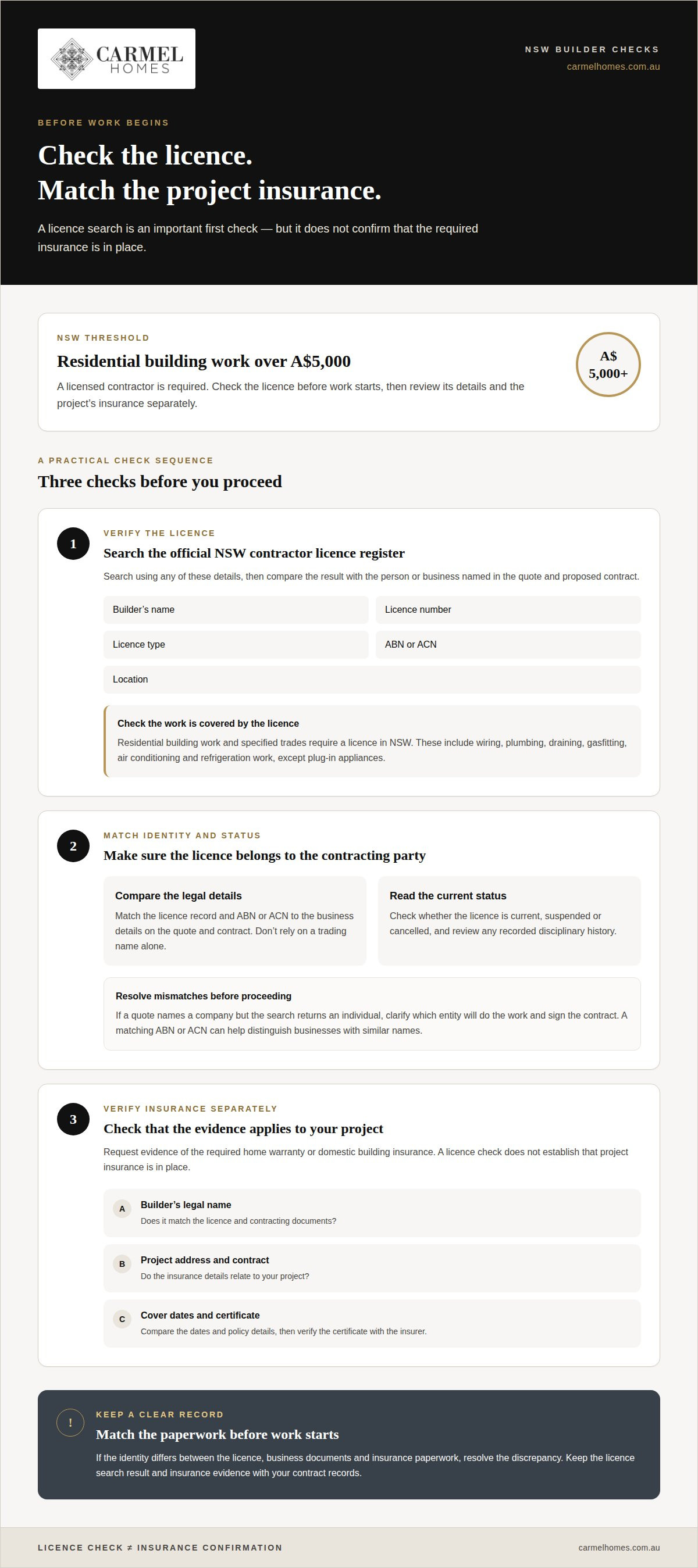
In NSW, check the contractor’s licence before work starts, then assess its details and insurance separately. For residential building work over A$5,000, a licensed contractor is required.
Verify the NSW contractor licenceSearch the NSW contractor licence register using the builder’s name, licence number, licence type, ABN, ACN or location. Compare the result with the person or business named in your quote and proposed contract, and confirm the licence is current and relevant to the work.Residential building work and specified trades require a licence in NSW. These include wiring, plumbing, draining, gasfitting, air conditioning and refrigeration work, except plug-in appliances. If you cannot find a licence or use the online search, contact NSW Fair Trading. You can also check a digital trade licence or credential through the Service NSW app.
Check business and company detailsSearch the licence register by ABN or ACN, then compare the result with the business details on the quote and contract. Confirm that the legal entity on those documents matches the licence record. Do not rely on a trading name alone.For example, if a quote names a company but the licence search returns an individual, clarify which entity will do the work and sign the contract. Check the business name and company details across all documents. A matching ABN or ACN helps distinguish businesses with similar names, while any mismatch should be resolved before you proceed.
Request evidence of the required home warranty or domestic building insurance separately, because a licence check does not confirm project insurance. Compare the insurance certificate or policy details with the builder’s legal name, your project address, the contract and the cover dates. Then verify the certificate with the insurer.Keep the licence search result and insurance evidence with your contract records. If the builder’s or tradesperson’s identity differs between the licence, business documents and insurance paperwork, resolve the discrepancy before work starts. This comparison helps confirm that the licence belongs to the contracting party and that the insurance evidence relates to your project.
Checking licence status and disciplinary history
Use the relevant state register to check a licence’s current status and any recorded disciplinary action. Compare the results with the builder’s documents before deciding how to proceed.
Review licence details and statusOpen the relevant state or territory register and search the builder’s name or licence number. Check whether the licence is current, suspended or cancelled, and whether its details match the person or business named in your contract.In NSW, the licence register can show cancellations or suspensions under the Fair Trading Act 1987. Read the status alongside the licence record, rather than relying on an old card or copied certificate. A discrepancy between the register and presented documents needs attention before you proceed.
Check disciplinary historySearch the regulator’s disciplinary or compliance register using the builder’s name and business details. In Victoria, the Building and Plumbing Commission’s Compliance and Enforcement Register includes proceedings against individuals since April 2019 and companies since July 2018.In Queensland, a licensee who accumulates 30 demerit points over three years can face a three-year industry ban. Consider the recorded action, its outcome and whether the register shows a current restriction. A name match alone is insufficient if the listed entity differs from the contracting party.
Spot invalid licence or insurance documentsCompare each document’s legal name, licence number, status and dates with the official register. Red flags include mismatched names, altered details, expired documents, a suspended or cancelled licence, or insurance paperwork naming a different business or project.For example, if the contract names a company but the insurance certificate names an individual, treat the inconsistency as unresolved. Clarify any document that cannot be matched to the register or project before signing or starting work. These signs do not establish fraud by themselves, but the paperwork should not be relied on as presented.
Finding the official builder licence registers in each Australian state and territory
Choose the register for the state or territory where the project is located, then search the builder’s legal name or licence number. Insurance obligations and project thresholds vary, so check the relevant scheme separately from the licence record.
In New South Wales, use the contractor licence search and match its result to the contracting party. Residential building work over A$5,000 requires a licensed contractor.
In Victoria, use the Building and Plumbing Commission’s practitioner information and compliance resources. Domestic building work over A$10,000 requires a registered building practitioner. Domestic Building Insurance (DBI) is mandatory for contracts over A$16,000, while the new Home Warranty scheme applies to eligible contracts over A$20,000 from 1 July 2026.
In Queensland, search the QBCC Licensee Register. A licence is required for residential building work over A$3,300.
In Western Australia, use Online Licence Search, provided by Building and Energy, DEMIRS. Contractor registration is generally required for building work over A$20,000 in prescribed areas, subject to exemptions.
In South Australia, use Find a Licence Holder, provided by Consumer and Business Services. In Tasmania, search the licensed occupations register from Consumer, Building and Occupational Services.
In the ACT, use Access Canberra’s register for licensed design and construction professionals. In the Northern Territory, search the Building Practitioners Board Register.
For insurance, identify the applicable state or territory scheme and contract threshold, then review the project documents. Request current certificates for home building cover, public liability and workers compensation. Compare the insured entity, project details and dates, and verify them with the named insurer.
There is no single threshold that applies across Australia. Follow the relevant jurisdiction’s rules and consider the project details. A licence register confirms licensing information, not whether home warranty cover, public liability or workers compensation applies to or covers your project.
Requirements vary by jurisdiction and project. In Victoria, Domestic Building Insurance is mandatory for contracts over A$16,000, while the new Home Warranty scheme applies to eligible contracts over A$20,000 from 1 July 2026.
What licence details should I check before hiring an Australian builder
Compare the register entry with your project scope, contract and the builder’s legal identity. Licence classes and grading systems vary between states and territories, so check the rules that apply where your home will be built.
Match the licence holder. Confirm that the registered name and licence number match the entity named in your contract. If the register lists an individual but your agreement names a company, establish which party holds the licence and is responsible for the work. Check that the licence is current, rather than relying on an old card or paperwork from a previous project.
Compare the licence scope with the project. Review the class or category against the building work planned, including whether it covers the type of residence. In Queensland, residential construction licence classes cover detached dwellings classified as Class 1a buildings. A licence entry should align with the work being contracted, not simply show that the builder holds some form of registration.
Check any grading limits. In the ACT, builder licences are graded A to D according to building height and Building Code of Australia classification, rather than project dollar value. Confirm the grade covers the proposed storey count, including any basement, and that the licence is current. Compare your plans with the grade’s permitted scope.
Review conditions and project documents. Read the register entry for restrictions or conditions, then compare them with the work described in the contract. Check that the licensed party is the same one named in the quote and insurance documents. Keep copies of the register result and contract so you can refer to the same details throughout planning.
Apply the check to your design brief. If you’re shaping a new home around specific architectural priorities, explore a custom design and build that brings the brief and construction process together.
Carmel Homes: Custom Design and Build
Carmel Homes provides Custom Design and Build for homeowners who want a residence shaped around their priorities rather than standardised plans. After reviewing the relevant licence and insurance requirements, you can work with Carmel Homes to turn a considered brief into a tailored home.
Carmel Homes also builds Knockdown Rebuild homes, French Provincial Luxury Homes and Modern Custom Home Designs. Whether you are planning a new home for your block or replacing an existing residence, the design can reflect the character and function you want. The earlier checks remain essential to an informed building decision, alongside thoughtful design and sound project preparation.
Contact Carmel Homes to discuss your custom home plans.
Shape your next step with care
Knowing how to check a builder’s licence and insurance in Australia helps you make a considered decision. The next step is to define what you want your home to become. Look beyond immediate needs and consider how its layout, materials and architectural character could serve your household over time.
A clear brief gives your conversations with a builder direction. Consider which qualities matter most, from how natural light moves through the rooms to the balance between privacy, entertaining and everyday comfort. These priorities can turn an early idea into a home that feels distinctly yours.
If you’re ready to explore your plans, contact Carmel Homes to begin a conversation about your vision. A thoughtful next step can bring your aspirations into focus.
Frequently Asked Questions
How do I check if a builder is licensed in Australia?
Search the official licensing register for the state or territory where the work will take place. Enter the builder’s name or licence number, then compare the record with the proposed contract and project scope. When checking a builder’s licence and insurance in Australia, treat insurance as a separate check, because the two records establish different things.
What if the builder uses a company name different from the licence name?
Establish how the names are connected before signing or paying. A trading name may differ from a company’s legal name, but the contracting entity should be clear in the agreement and supporting records. Compare the ABN or ACN, business name and licence holder details. If the licence belongs to an individual but the contract names a company, clarify which party is undertaking the work.
What if the licence is current but the builder has had disputes?
A current licence does not make a recorded disciplinary outcome or unresolved dispute irrelevant. Review the nature and outcome of the action, along with any conditions or restrictions, then compare these with the proposed project. For example, a past matter involving a different type of work may call for a different assessment from a current restriction relevant to your contract. Keep the register record with your decision notes.
What should I check before paying a deposit?
Before paying, make sure you have a signed contract that identifies the correct builder and describes the agreed work, plans and payment stages. Check that the invoice names the same contracting party and that the payment account details match the business documents. Review the applicable insurance evidence and confirm the deposit request follows the contract terms. Keep the agreement, invoice and payment record together.
How do I check a builder’s licence in Australia by state or territory?
Start with the jurisdiction where the building site is located, because licensing systems vary. Search using the builder’s legal name or licence number, then compare the licence status and scope with your project. For example, a Queensland detached-home project requires a check of the relevant residential construction licence class. An ACT project requires attention to the builder’s grade and the building’s classification and storey count.
Which government website verifies a builder’s licence in each Australian state?
Use the relevant regulator’s public register: NSW contractor licence search; Victoria’s Building and Plumbing Commission practitioner register; Queensland’s QBCC Licensee Register; Western Australia’s Online Licence Search from Building and Energy, DEMIRS; and South Australia’s Find a Licence Holder from Consumer and Business Services. Tasmania’s register is provided by Consumer, Building and Occupational Services; Access Canberra covers the ACT; and the Building Practitioners Board provides the Northern Territory register.


